
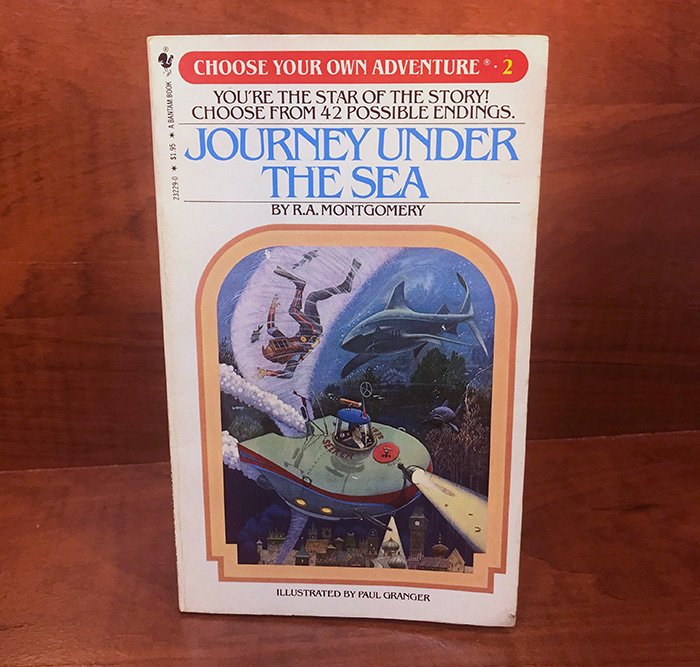
Choose Your Own Adventure: Stories Where You Make the Choices
Imagine reaching a crossroads in a story. One path leads into a mysterious forest; another follows a trail towards a distant castle. Instead of simply reading what happens next, you decide. That is the appeal of a choose-your-own-adventure story: the reader helps shape the plot, and each choice can lead to a different outcome.
How does a choose-your-own-adventure story work?
In a traditional branching story, the reader is given a choice at the end of a section. They might be asked to turn to a particular page, follow a link or select an option on screen. Each decision takes the story in a new direction.
Some choices lead to success, while others bring a setback or an unexpected ending. A story might have several possible conclusions, and readers can go back to try different routes. The experience is part narrative, part puzzle and part game.
A brief history
Interactive storytelling has a long history, but printed branching books became especially popular in the late twentieth century. The best-known book series called Choose Your Own Adventure began in 1979 and introduced many young readers to stories they could navigate for themselves. The phrase is also widely used to describe branching stories more generally.
Today, the format appears in books, online fiction, video games, educational activities and even marketing campaigns. Digital versions can include clickable choices, illustrations, sound and animation, but the central idea remains the same: the audience takes an active role in the story.
Why readers enjoy making the decisions
In an ordinary story, readers follow the events chosen by the author. In a branching story, they become participants. A decision can feel exciting because it carries consequences, even when the stakes are imaginary.
- More involvement: Choosing what a character does can make the story feel personal.
- Replay value: Different routes encourage readers to return and discover what they missed.
- Surprise: A seemingly small decision can lead to an unexpected result.
- Experimentation: Readers can explore possibilities without having to get every choice right first time.
What makes a good branching story?
A successful choose-your-own-adventure story needs more than a collection of choices. Its branches should feel connected to the characters and the world, and each decision should have a clear reason for being there. Choices are most satisfying when they reflect different priorities: courage or caution, honesty or secrecy, loyalty or self-interest.
It also helps to keep track of the story’s structure. Writers often map the plot as a flowchart, showing where each section leads. Without a plan, branches can become confusing or end up repeating the same events. The writer must decide how many paths to create, where they might join again and how many endings the story needs.
Not every choice has to split the story into completely separate adventures. Some decisions can change a detail, reveal new information or affect how a character responds later. This keeps the story manageable while still giving the reader a sense of influence.
How to create your own
To write a simple branching story, begin with a character, a problem and a clear goal. Then choose a moment when the character must make a meaningful decision. Write what happens after each option, making sure every route leads somewhere interesting.
- Set the scene. Introduce the character, setting and problem quickly.
- Offer clear choices. Make each option distinct and understandable.
- Show the consequences. Let decisions change events, relationships or information.
- Plan the routes. Use a diagram or outline to keep track of every branch.
- Test the story. Follow each route yourself, then ask someone else to try it.
A story that belongs to the reader
Choose-your-own-adventure stories turn reading into an act of discovery. They invite readers to take risks, reconsider their decisions and imagine how events might have unfolded differently. Whether printed on a page or presented on a screen, the format offers a simple promise: the next part of the story depends on you.
Crafting Your Own Adventure: 8 Essential Tips for Engaging Storytelling
- Choose a clear goal for your adventure.
- Offer choices that lead to different outcomes.
- Keep each option easy to understand.
- Add clues to help readers decide.
- Make consequences feel meaningful.
- Vary the risks and rewards.
- Let readers revisit earlier choices.
- End with a satisfying conclusion.
Choose a clear goal for your adventure.
Choose a clear goal for your adventure so readers always have a reason to keep moving forward. It could be finding a missing person, escaping from a remote island or solving a puzzling mystery. A strong goal gives the story direction, helps shape the choices and makes the consequences feel meaningful. Keep it in view as the plot branches, so every route feels connected to the adventure’s central purpose.
Offer choices that lead to different outcomes.
Offer choices that lead to genuinely different outcomes, so each decision feels meaningful. A bold choice might help the character gain an ally, while a cautious one could uncover useful information or avoid danger. The paths do not always need entirely separate plots, but choices should change what happens, reveal something new or affect how the story ends. This gives readers a real reason to explore different routes.
Keep each option easy to understand.
Keep each option easy to understand so readers can make a choice without having to puzzle over what it means. Use clear, distinct wording and show what the character will do next, while leaving the outcome open for discovery. For example, “Open the door” and “Climb through the window” are easier to follow than vague or complicated alternatives.
Add clues to help readers decide.
Add clues to help readers make informed choices without giving everything away. A character’s warning, a detail in the setting or a hint about what might lie ahead can guide readers as they weigh their options. Well-placed clues make decisions feel meaningful and fair, while leaving enough uncertainty to keep the adventure exciting.
Make consequences feel meaningful.
Make consequences feel meaningful by ensuring that each choice genuinely affects what happens next. A decision might change a character’s relationships, reveal new information, create a setback or open up a fresh opportunity. The outcome needn’t be dramatic every time, but readers should be able to see how their actions shape the story. When choices have clear, believable consequences, readers feel more invested in the adventure—and more curious about what might happen if they choose differently.
Vary the risks and rewards.
Vary the risks and rewards to keep readers curious and make each decision feel meaningful. Some choices might offer a small, reliable benefit, while others promise a greater reward at a higher cost. Include consequences that are surprising but fair, so readers can see how their decisions shaped events. By balancing safe options with tempting risks, you give each branch its own appeal and encourage readers to explore different paths.
Let readers revisit earlier choices.
Let readers revisit earlier choices so they can explore different paths without starting the story from the beginning. This makes the adventure more engaging, encourages experimentation and helps readers discover how small decisions can lead to very different outcomes. In a printed story, you could direct them back to a previous section; in a digital version, include a clear way to return to earlier choices.
End with a satisfying conclusion.
End your choose-your-own-adventure story with a conclusion that feels earned and satisfying. Each route should bring the reader’s choices to a meaningful result, whether that means solving the central problem, learning something important or facing a fitting consequence. You don’t need to make every ending happy, but avoid making outcomes feel abrupt or unfinished. A thoughtful final moment can give readers a sense of closure—and leave them keen to explore the other paths.